

Talk to an Inntel expert
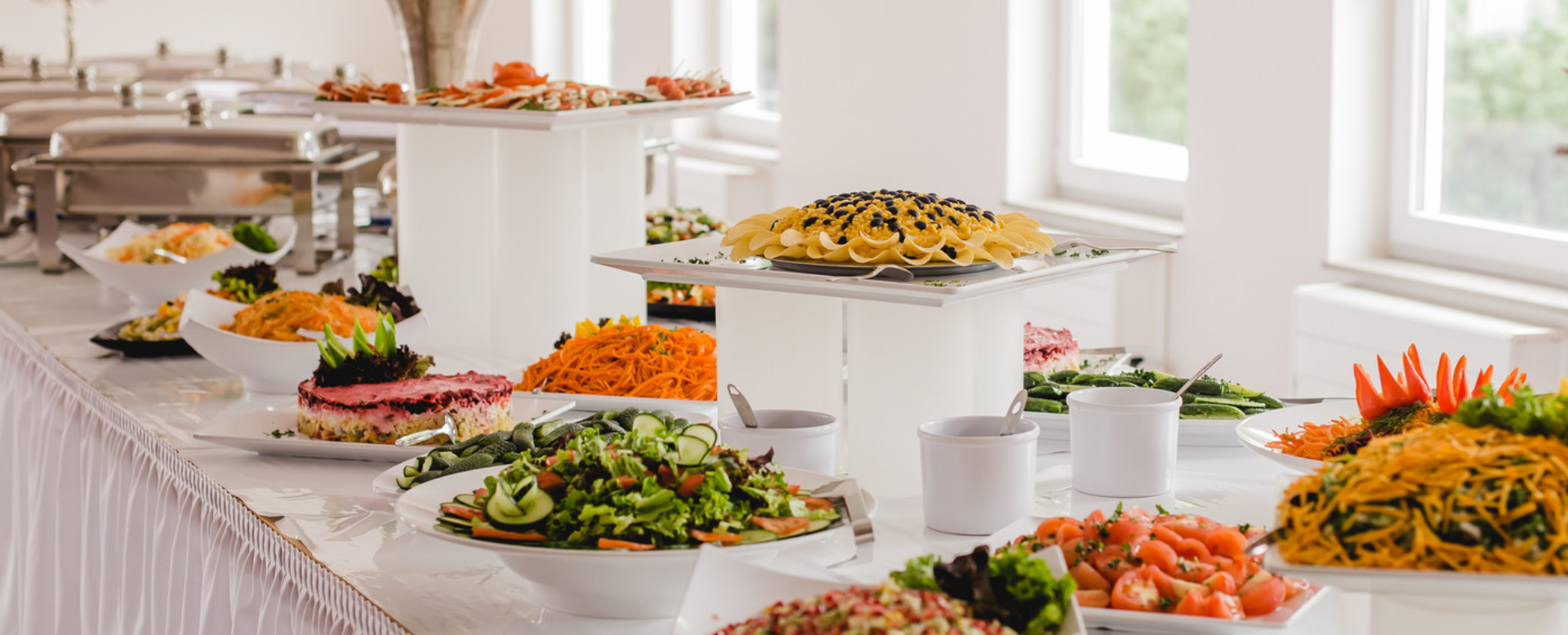


Food has always been a key element of events. But increasingly, it is becoming part of the experience.
For event planners, catering is no longer simply a line on the budget or something to organise once the venue and agenda are confirmed. The menu, service style and dining experience can influence how an event feels, what it communicates about an organisation and, importantly, what attendees remember afterwards.
That matters at a time when attendee experience is becoming an increasingly important measure of event success. Cvent’s 2026 Planner Sourcing Report found that 63% of planners now cite attendee engagement as their primary event KPI.
So perhaps it is time to stop treating food as an operational detail and start treating it as a design decision.
Every catering decision communicates something. A locally sourced seasonal menu can reinforce sustainability commitments. Thoughtful dietary provision can demonstrate inclusivity. A relaxed sharing menu may encourage conversation, while beautifully executed fine dining can help create the sense of occasion required for a celebratory evening.
Even a traditional event format can offer opportunities to do something differently. At a Greengage Solutions awards event attended by members of the Inntel team, seasonal produce was incorporated into the table centrepieces. Guests were given sustainable tote bags and invited to take produce home at the end of the event.
It was a relatively simple idea, but one that extended beyond decoration. The food became part of the event’s sustainability story, a conversation starter and something attendees physically took away with them.
That is the difference between catering being provided at an event and catering contributing to the event.

Experiential dining gives planners the opportunity to turn a meal into entertainment, storytelling or an opportunity to connect.
For example, at an Meeting Industry Association (mia) event at Down Hall Hotel, Spa and Estate in Essex, Inntel’s ESG Executive experienced dining in the venue’s Kitchen Garden. Here, seasonal ingredients are grown and dishes are cooked over open flames.
The menus are shaped by what is available in the garden, with ingredients including estate-grown vegetables and herbs. The setting, food and sustainability story work together rather than existing as separate elements.
Technology can add another dimension. Le Petit Chef at The Bloomsbury Ballroom, for example, combines dinner with 3D animation projected directly onto the table, with a miniature animated chef appearing to prepare each course in front of diners.
The dining itself can become part of the content when it supports the purpose and personality of the occasion.

Cookery classes, tastings and food experiences can work particularly well for team building because they give people something practical to do together while conversation develops naturally.
Unlike some traditional team-building activities, cooking does not necessarily demand that people perform, compete or move too far outside their comfort zone. Participants can learn a skill, solve problems together and enjoy the results afterwards.
Food also provides an easy route into conversations about culture, family, travel and tradition.
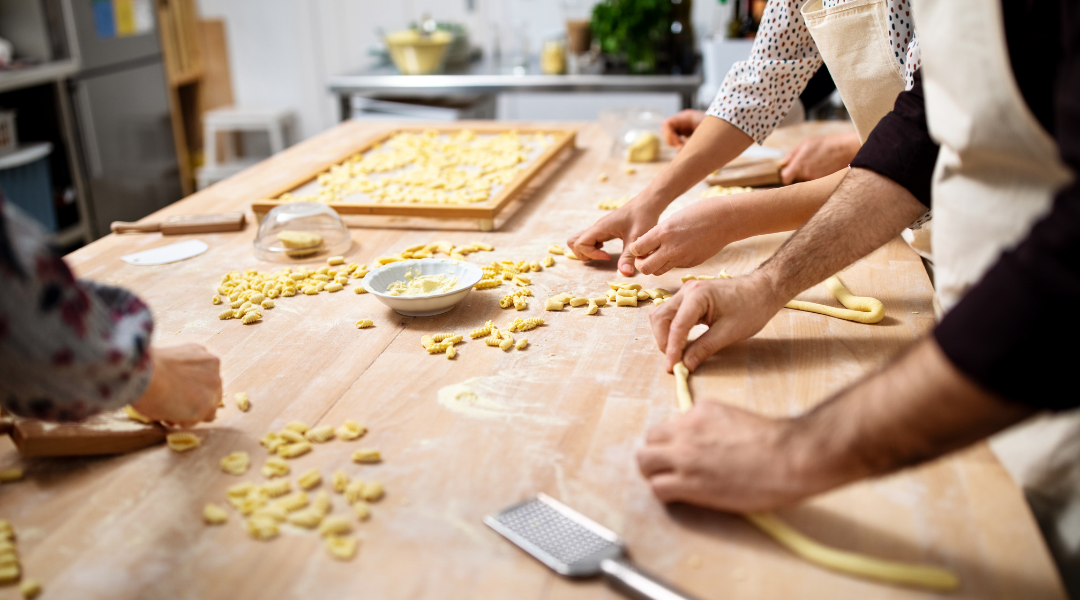
We have seen this first hand through Inntel incentive programmes. During a Rome incentive trip, one of the activities included an informal pasta-making evening.
It proved popular with the group, with one attendee commenting:
“We had to work as a team during this and the whole set-up and evening was something I really enjoyed and will never forget.”
In Sicily, another incentive trip coordinated by our team incorporated pizza making, wine tasting and a banquet featuring local produce as part of the destination experience. This again was a big hit with attendees.
Catering may not always be the largest contributor to an event’s overall carbon footprint – particularly when compared with travel – but it is one of the areas planners can directly influence.
Research published by isla in its A Closer Look: Catering report found that beef and lamb account for 45% of catering emissions despite representing only 10% of portions served.
The research also found that plant-forward menus tend to cost less than red-meat-heavy alternatives, giving planners an opportunity to reduce both carbon emissions and costs.
That does not necessarily mean making every event completely plant-based. It does mean thinking more carefully about where meat sits within the menu. Consider replacing beef with a lower-carbon option. Why not make vegetables the centrepiece rather than the accompaniment?
Small menu decisions can have a big impact.
How food is presented matters too. If the first thing an attendee sees is ‘vegetarian/vegan option’, ‘meat-free alternative’ or ‘plant-based substitute’, the description immediately frames the dish around what it does not contain.
Start with the food instead. Roasted squash with harissa, whipped feta and toasted hazelnuts sounds like a dish. ‘Veggie option’ sounds like a compromise.
Make the lower-impact option appealing enough that people want to choose it.
Sustainable catering also needs to be inclusive catering. Remember that vegetarian and vegan requirements are not interchangeable, just as gluten-free, halal, kosher and allergy requirements cannot simply be grouped together for operational convenience.
It’s understandable why venues look for ways to simplify increasingly complex dietary requests. But the guest experience matters.
A vegetarian attendee should not automatically receive a vegan meal simply because it is easier to provide one dish for everyone who does not eat meat. Equally, guests with allergies or religious dietary requirements need confidence that their needs have been properly understood rather than broadly categorised.
Ask for dietary requirements clearly during registration and make sure the information reaches the catering team accurately. And give each group the same consideration you would give the main menu.
Nobody wants to be at an awards dinner where fellow guests are enjoying a carefully considered three-course meal while their own option feels like an afterthought.
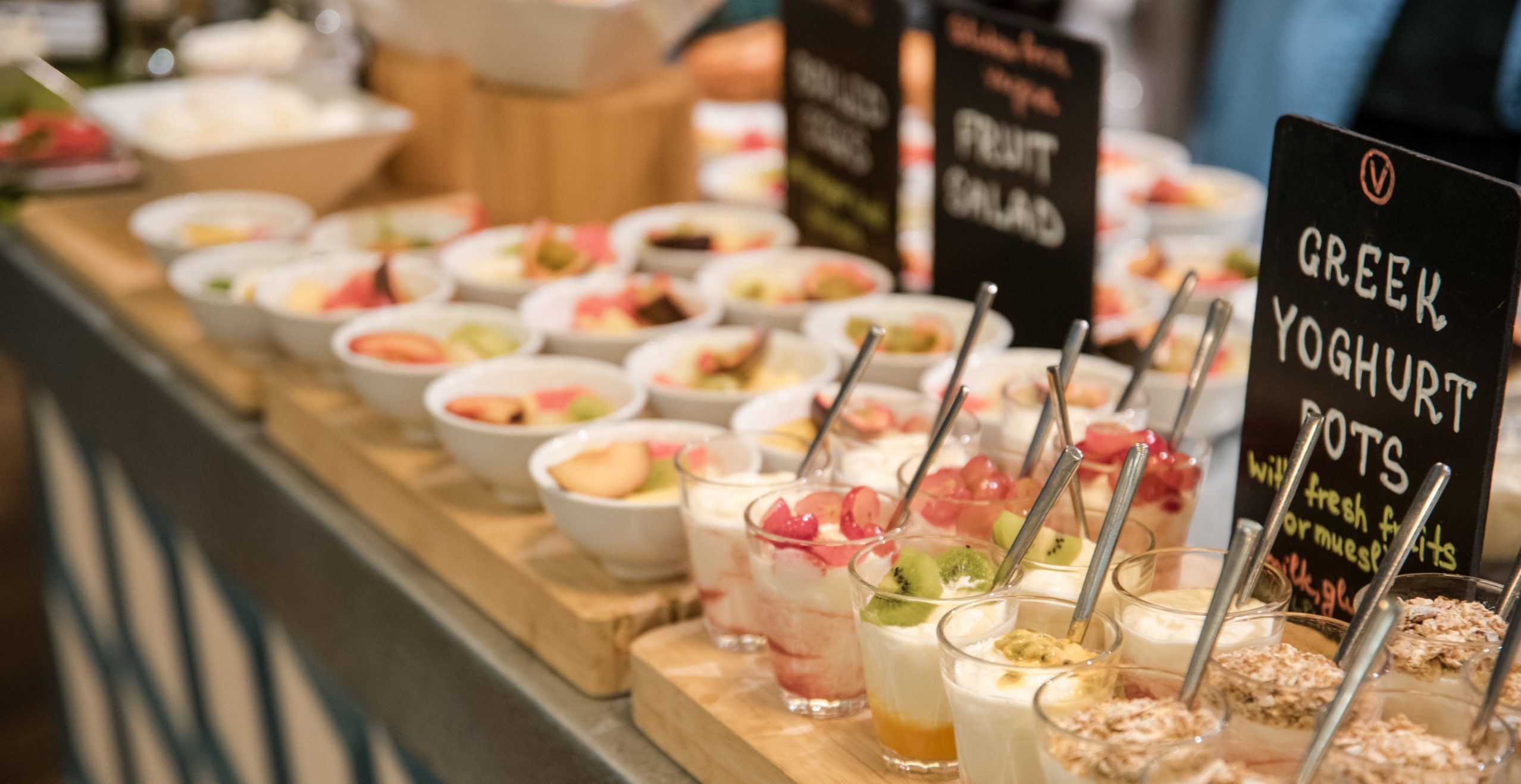
Catering should also work with the rhythm of the event.
A three-course lunch may be perfect for one occasion but less suitable before an intensive afternoon workshop, while a rushed sandwich may not create the pause and connection you want from a networking lunch.
Consider what comes before and after the meal, how much time is genuinely available and how you want people to feel when they return to the agenda.
Food should support the event experience, not compete with it.
The best event catering rarely happens when food is considered at the end of the planning process. Bring catering into conversations about experience, sustainability, accessibility, brand and budget from the beginning.
Think about what you want attendees to feel, how you want them to interact and what you want them to remember. Then ask what role food can play in making that happen.
Often, the thing people are still talking about on the journey home isn’t the keynote or the stage set. It’s what happened around the table.
From finding the right theme and sourcing the perfect venue to arranging group travel, accommodation, and catering, Inntel’s Meetings and Events team can take care of the details. Click below to get in touch.