

Talk to an Inntel expert



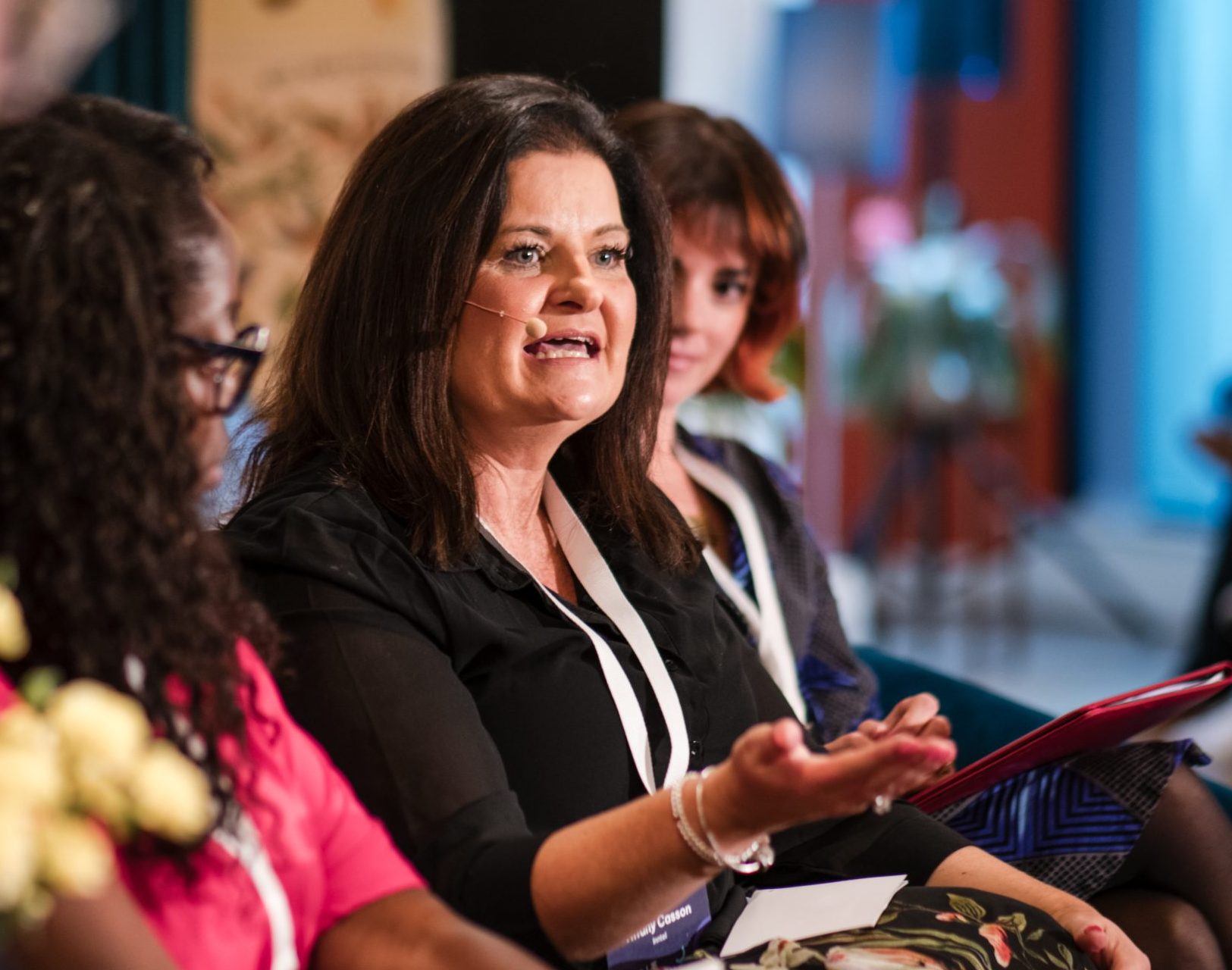
At the BTA Autumn Conference in September, I had the opportunity to take part in a panel discussion that means a great deal to me and I am deeply passionate about: Let’s Make Accessibility Work.
As Chair of the BTA Accessibility Working Party, accessibility in business travel is something I’ve been closely involved with for some time. What made this session particularly valuable was the opportunity to bring together different lived experiences and talk openly about what travelling for work can really feel like when accessibility needs are part of the journey. It’s definitely not easy and our real life experience demonstrated that.
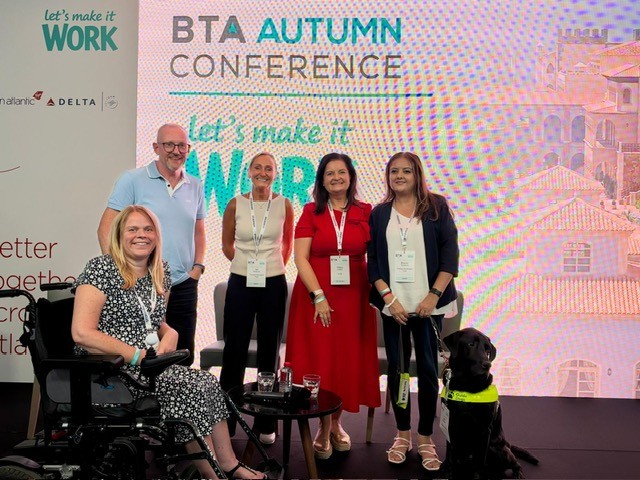
On the panel, I was joined by Jen Sweeney, Corporate Engagement Lead, and Bhavini Mahkwana, Policy & Campaigns Manager and her incredible guide dog Colin, from the Thomas Pocklington Trust, alongside Jo McNicoll from BCD Travel. Jo and Bhavini gave insights into travelling using a wheelchair (for Jo) and for Bhavini travelling with Colin.
Clive Wratten, CEO of The Business Travel Association, hosted at the session. Together, we explored the progress our industry has made, the barriers that still exist and, importantly, what travel management companies can do to make accessible business travel work better in practice.
One of the points I raised during our session was that our industry has many pockets of brilliance but there is still a lot of work to be done.
We have seen significant progress across airlines, rail, accommodation and meetings and events over the past few years. There are some fantastic examples of organisations introducing better support, improving processes and thinking more carefully about accessibility. But where we can still fall down is the end-to-end journey.
For a traveller, it is not enough for one part of the experience to work well if the next stage creates a barrier. A journey might include rail, an airport, a flight, ground transport, a hotel and a meeting or event. Each individual supplier may have accessibility measures in place, but the traveller experiences all of those touchpoints as one journey.
That is why we need to look beyond individual services and think about how the entire experience joins up.
This point resonated with many, including Bev Fearis, editor of The Business Travel Magazine. (Thank you Bev!)
For travel management companies, one of the most practical ways we can make a difference is by asking the right questions.
A consultant might be arranging a flight, hotel, rail journey or meeting, but the information gathered at the beginning can have a significant impact on how smoothly that journey works.
It is also important that we do not make assumptions about what somebody needs.
Two people with the same disability or difference may have completely different requirements and preferences. The best approach is to create an environment where travellers feel comfortable explaining what would make their journey work better for them, and where consultants have the confidence to ask appropriate questions.
This thinking sits behind the BTA’s Inclusive Business Travel Guide, which the Accessibility Working Party has developed to support TMCs in doing exactly that.
The guide considers a broad range of disabilities and differences, helping consultants think beyond visible accessibility needs and consider the traveller as an individual. My part of the panel focused on how the guide can be used in practice by travel management companies.
For me, that practical element is incredibly important. Guidance is only useful if people can take it away and apply it in their day-to-day work.
“We have seen significant progress across airlines, rail, accommodation and meetings and events over the past few years. But where we can still fall down is the end-to-end journey.”
One of the most powerful parts of the session was hearing directly from Jo and Bhavini about their own experiences of travelling. Jo shared her perspective on travelling as a wheelchair user, while Bhavini spoke about travelling with her guide dog, Colin and explaining from my own perspective how neurodivergent travellers may feel.
Those lived experiences are essential because they remind us that accessibility cannot be designed effectively through assumptions alone. We need to listen to the people actually making these journeys and understand where the barriers occur in the real world.
That is one of the reasons the work of the BTA is so important. It brings together different perspectives from across the industry, helping us identify what is working and where there is still more to do.
I had a genuine connection with my fellow panellists. In fact, our little group spent the conference together and made great friends. Being a huge dog lover, I enjoyed making a fuss of Colin when he wasn’t too busy working. And funnily enough, Jen and I worked together for 10 years in the Marriott National Corporate Sales Team and our paths crossed once again on this very special project bought together by Clive.
Accessibility is not something our industry can solve through one guide, one panel session or one organisation. It requires collaboration across TMCs, suppliers, buyers and travellers, and a willingness to keep listening and learning. But I do think we are moving in the right direction.
The more confident we become in talking about accessibility, the better equipped we are to identify barriers and remove them. And the more we involve people with lived experience in those conversations, the more likely we are to create travel programmes that genuinely work for the people using them.
There is plenty more to do, but I am incredibly proud of what we’ve has achieved so far – and very excited about where we go next.
Tiffany Casson has been an Account Manager at Inntel for over a decade, with a background in the hotel sector. Passionate about diversity and inclusion, Tiffany is a voluntary Ambassador for Neurodiversity in Business. Her work has been recognised with industry awards, including the ITM Game Changer Award 2024, Women in Travel DEI Champion 2024, and Business Travel People’s Chair Award 2023.